 Lybster Harbour |
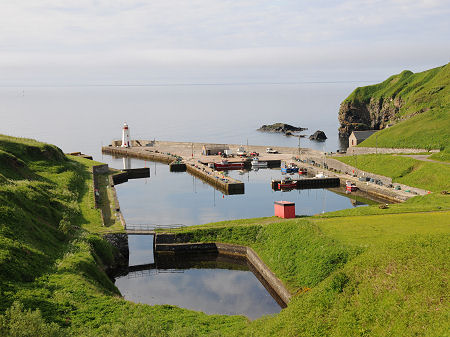
The main A99 passes through the northern edge of Lybster en route north-east to Wick, and that is probably as much as most people see of it: a crossroads and the attractive Portland Arms Hotel. You need to turn off the main road to reach the heart of Lybster, and it really is worth the effort in order to get to know this unusual and attractive village and, especially, its very striking harbour.
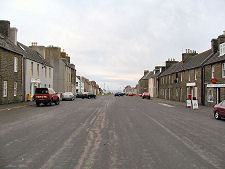
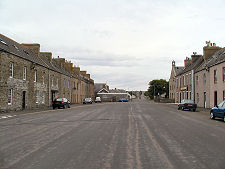
The first thing of note is the enormous width of the main street. It seems unlikely that the original builders had eventual conversion to a dual carriageway in mind. But even this could scarcely take up all the available space in a street that seems to dwarf the lines of substantial stone buildings that flank it. At busy times this can give rise to double and triple parking as people nip into the village shop, but even that scarcely makes a dent in the available space.
Lybster was begun as a planned village in 1802 by the local landowner, General Patrick Sinclair. His sons fought at the Battle of Waterloo and in their honour he named the section of Main Street where it met what is now the A99 "Quatre Bras".
Development of the village was continued by one of those sons, Captain Temple Sinclair. He had a keen interest in politics and was a strong supporter of the Whig Party. In the 1830s he named five of the streets in the village after leading Whig politicians of the day: Grey's Place, Althorpe Street and Althorpe Court, Jeffrey Street and Russell Street. The name of nearby Union Street seems to have been equally political in its origins. (Continues below image...)
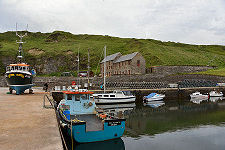
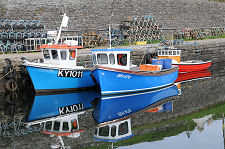
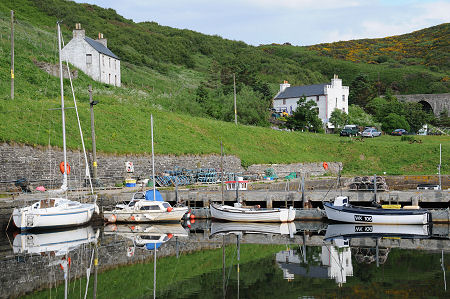 Boats in Lybster Harbour |
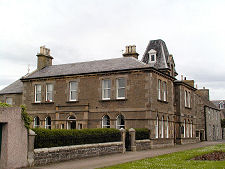
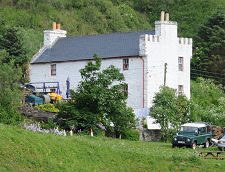
But to find the reason for Lybster's existence you need to pass through the village and turn right towards its seaward end, then descend the steep and narrow road to Lybster's harbour. En route look out for Inver House, about half way down the hill on your left. This is unusual in appearance, having a line of crenellations along one wallhead.
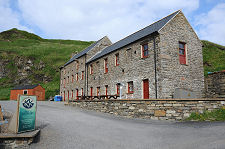
Alongside the harbour at Lybster is one of the area's major attractions: the nicely restored buildings housing Waterlines. This is a heritage centre telling the story of Lybster and, in particular, of the development of its harbour and fishing industry, in an exhibition area on the first floor. Downstairs it houses a nice cafe with facilities for visiting yachtsmen. Outside, beyond the far end of the building, is an array of the rocks found in the north-east Highlands, while the end of the building nearest the harbour is set up to show how it would have operated in its days as a smokehouse, curing part of the catch of fishermen operating from Lybster and from neighbouring harbours.
We tell the full story of the growth of Lybster Harbour on our Waterlines page, but development of harbour facilities began with a wooden pier in 1790s, and continued at intervals throughout the 1800s, with ever larger harbours being built to accommodate ever larger fleets of fishing boats. By 1859 there were 357 boats fishing from Lybster, making it the third busiest fishing port in Scotland after Wick and Fraserburgh, and the industry employed some 1,500 fishermen, and even more people on land.
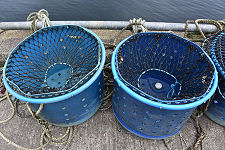
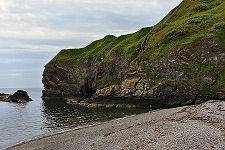
The herring boom was largely over by the time the Wick and Lybster Light Railway, built in an ill-timed attempt to profit from the boom, arrived in 1899. During a large part of the 1900s Lybster supported a successful white fish fleet, but this too has gone, leaving a much quieter place now home to a number of small fishing boats catching lobsters and crabs. As a result there is still a lot of evidence of fishing in terms of the boats moored in the harbour and the lobster pots and other fishing gear piled around it. This is a really superb working harbour in a stunning setting between flanking grassy headlands.
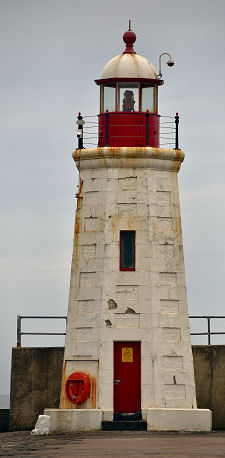
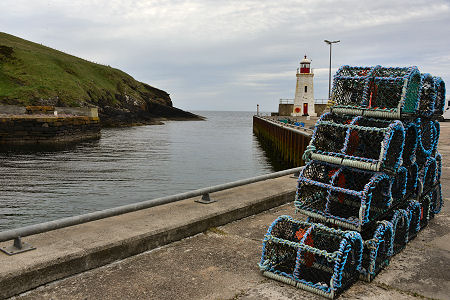 Lobster Pots and Lighthouse |
|
|
|
Visitor InformationView Location on MapWhat3Words Location: ///staple.broadcast.fields |
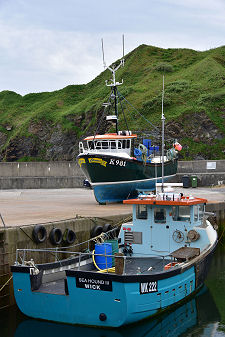 Fishing Boats |
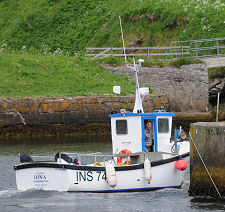 Iona Leaving Harbour |
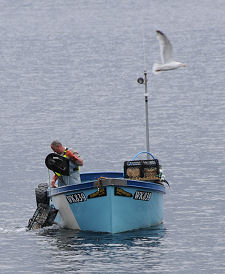 Fishing in Lybster Bay |
 Lighthouse |